
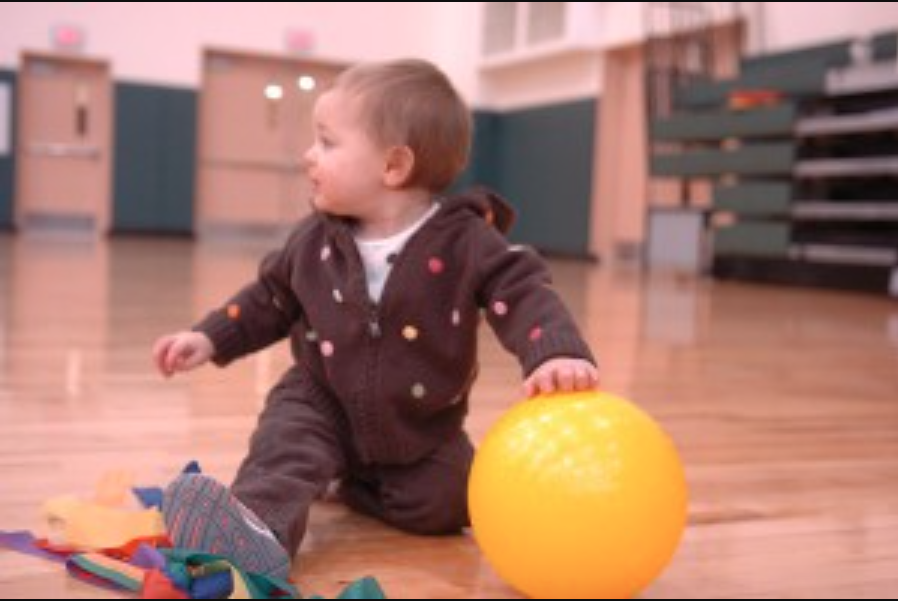
- Self-talk:Explain everything you are doing, seeing, hearing, or feeling. Your child does not necessarily need thave their full attention on you, but use clear, simple words to narrate your actions. For example, if you are making dinner you can report, “I am taking out the plates. Now I am turning on the oven. Time to stir the pasta.”
- Parallel talk: While you are interacting with your child, narrate their actions and what they see or hear. Again, your child does not need to have to fully focus on you. Simply speak slowly and use simple phrases. If your child hears a fire truck, you can say: “The fire truck has its siren on. Jayden is covering his ears. The truck is loud.”
- Expansion: Try to add one or two more words to what your child says. If your child says “Tree” you can say, “Climb tree”. If your child says, “Help Me,” you can suggest, “Can you help me?”
- Praise:Always respond to your child’s verbal request using either a nonverbal or a verbal response. Nonverbal responses include clapping hands, smiling, or eye contact. Appropriate verbal responses would be to imitate your child and tell them you are happy they are talking. For instance, if your child says “ba” for ball, respond by saying, “That is a ball. I like your talking”.
Resources:
“Language Modeling Tips.” The International Series in Engineering and Computer Science Verilog® Quicstart (2002): 187-218. Center for Speech and Language Pathologist. Web. 4 Aug. 2015.
“Speech Therapy Tip #4: Learn to Model Sounds Masterfully.” The Speech PathWay. The Speech PathWay, n.d. Web. 04 Aug. 2015.
Swigert, Nancy B. “Chapter 8: Intervention for Receptive Language.” Early Intervention Kit. East Moline, IL: LinguiSystems, 2004. 85. Print.
SUPPORT YOUR CHILD'S DEVELOPMENT
Looking for expert pediatric therapy services? Our team specializes in helping children reach their full potential through compassionate, personalized care.

Vasilikitsa “Kitsa” Antonopoulos, MA, CCC-SLP/L is a licensed speech-language pathologist with over two decades of experience supporting children and families. After earning her Bachelor’s and Master’s degrees in Communication Sciences and Disorders from Saint Louis University, she gained deep clinical expertise working across pediatric hospitals, early intervention programs, and autism therapy settings.
In 2010, Kitsa founded Lumiere Children’s Therapy to create a holistic, collaborative space where children could receive personalized, multidisciplinary care. Her vision continues to guide Lumiere’s dedicated team of therapists, offering speech, occupational, physical, and behavioral therapy and more, to help every child reach their fullest potential.