

While many children have picky food preferences, children with autism spectrum disorder (ASD) often have ritualistic or restrictive behaviors negatively affecting their food repertoire. Severe selectivity with food may lead to nutritional deficiencies and malnutrition. Below are answers to frequently asked questions regarding feeding disorders.
What causes food selectivity?
- Many children with ASD have limited food inventories due to oral motor deficits, sensory problems, and/or other medical complications. Children who prefer puree, soft food, and/or dissolvable foods such as Cheetos may have an underlying oral motor deficit. The child may prefer softer foods because they have not fully developed the oral motor skills to adequately chew and swallow foods. Speech language pathologists are able to evaluate for oral motor deficits, and provide appropriate therapy to increase oral motor abilities for eating and swallowing.
- Sensory problems may limit a child’s food choices based on color or texture. A child may avoid finger foods because they refuse to touch certain types of foods. Slippery or slimy foods may create a problem for children with sensory intolerance. One characteristic of children with ASD is rigidity. If a child approves of one brand of cereal, they become fixated on that brand and may refuse the generic brand. Occupational and speech therapist can target sensory tolerance of new textures and colors, as well as help expand a child’s brand and food options.
- in some cases, limited food preferences may be caused from other medical complications including gastrointestinal (GI) issues such as reflux and abdominal pain. Certain foods may be avoided because the child experiences pain or discomfort while consuming these foods. Children with ASD, both verbal and nonverbal, may have difficulty conveying the discomfort to parents and caregivers.
What is the difference between a feeding disorder and picky eater?
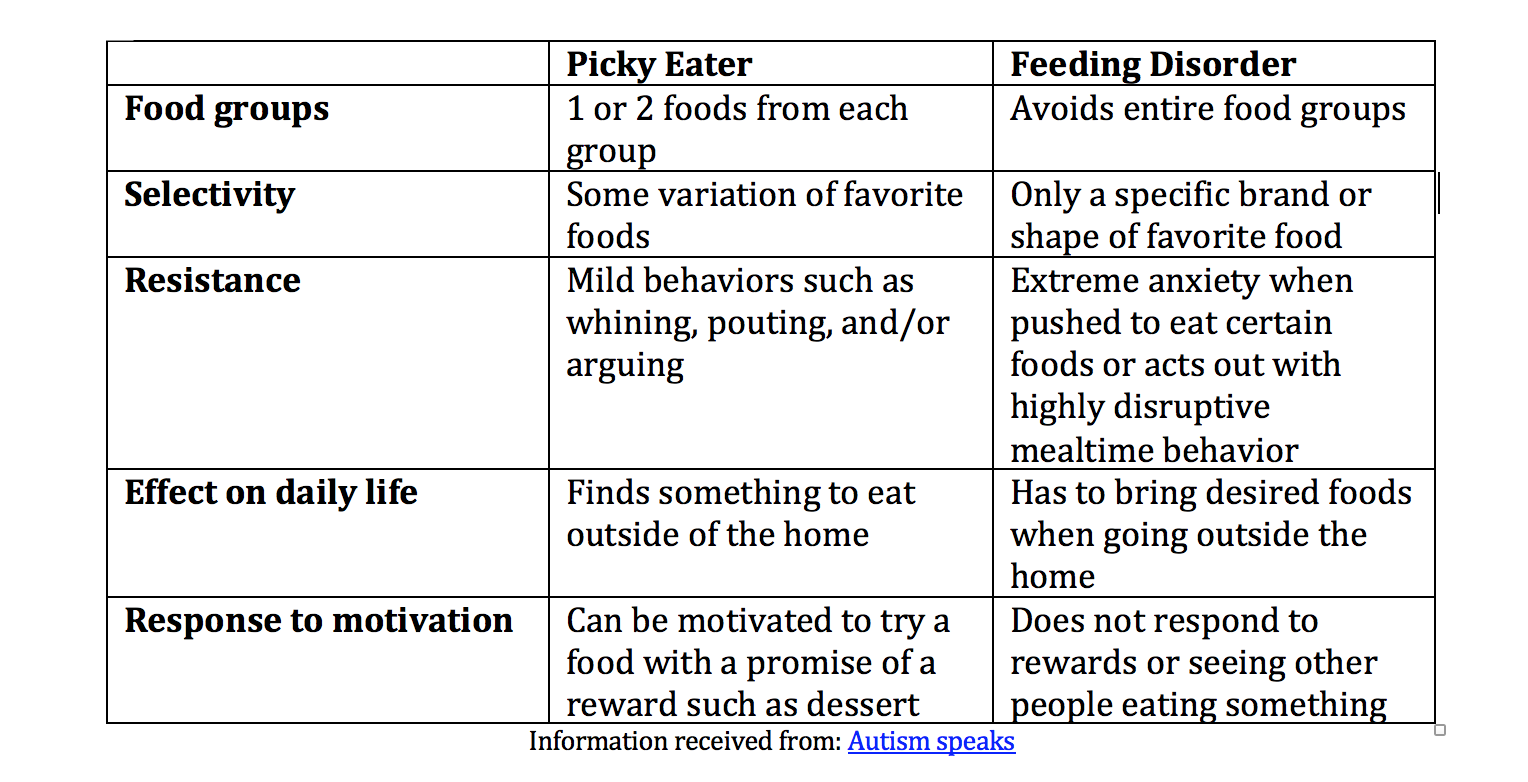
Feeding disorders typically involve extreme aversion or selectivity to food tastes and/or textures. Below is a chart to distinguish the difference between picky eaters and feeding disorders based on food groups, selectivity, resistance, effect on daily life, and response to motivation.
SUPPORT YOUR CHILD'S DEVELOPMENT
Looking for expert pediatric therapy services? Our team specializes in helping children reach their full potential through compassionate, personalized care.

Vasilikitsa “Kitsa” Antonopoulos, MA, CCC-SLP/L is a licensed speech-language pathologist with over two decades of experience supporting children and families. After earning her Bachelor’s and Master’s degrees in Communication Sciences and Disorders from Saint Louis University, she gained deep clinical expertise working across pediatric hospitals, early intervention programs, and autism therapy settings.
In 2010, Kitsa founded Lumiere Children’s Therapy to create a holistic, collaborative space where children could receive personalized, multidisciplinary care. Her vision continues to guide Lumiere’s dedicated team of therapists, offering speech, occupational, physical, and behavioral therapy and more, to help every child reach their fullest potential.